Archive for the ‘Contracting and Consulting’ Category

Teaching You to Be Your Own Contractor

contractors.jpg
Photo courtesy of Midland Contractors, Inc. (www.midlandinc.com)

Over the next few weeks, I will be posting information about how to be your own contractor. Many of the people I talk to are excited about the idea of contracting their own house; however, once they get knee deep, they start to realize why contractors are paid the money they are. There is a lot to being a quality contractor and simply having a desire to do it yourself is not enough to do it well. You will need knowledge and a plan. You will need forms and contracts. You will need help.
(more…)

Elephant Poop

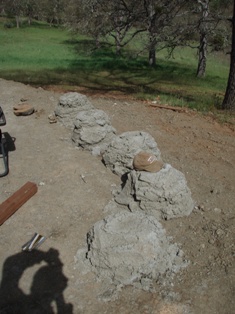
elephant-poops.JPGOkay so it’s not poop, but it could be from a distance! These are piles of extra concrete. It is so important to calculate materials well and it could be the straw that breaks your back. (I meant that pun by the way.) In this case, the truck load was too short for what the concrete guys had planned so they had to thin the slab thickness which ultimately left a lot of excess concrete. To be sure, I mentioned it to the concrete company owner. It was a mistake, and not a huge deal because the slab in this case was so small; however, on a big job, the little extras can run wild quickly.
(more…)

Working on an Exciting Project…Coming Soon!

Hi everyone. I am working on an awesome project that I will release in the coming months on this website. The downside is that I am so busy working on it that I have to take a break from the blog for a while. I will still answer questions and post comments, but I will not be posting new material for a while. Thanks for understanding and I think you will all agree it will be WELL WORTH THE WAIT!!!!

excitement.jpg
Photo by R. Wibbs

Building Straw Bale in Urban Areas

urban-house.jpg
Photo by Kessler Woods Homes
I received an email this morning about building with bales in urban areas. Here’s what she said (my answer will follow):

Hi Andrew,
I love your website and visit often. My husband and I are planning to build

our next house as a green building some time in the next three years. We
currently live in a rural area but want to move back to town (Boston). Do you
or anyone else out there have any experience building with straw bales in a
high-density area (like on a 0.08 lot)? We’ve been scouting for the perfect
south-facing lot with no sun-blocking neighbors…a challenge in the city!

Thanks, and keep up the good work. You are an inspiration.
Gwen
(more…)

Working with City Officials

podcast-interview-april-2007.JPG
I receive several emails a month from people who need help with the process of finding land, working with municipalities, and building their straw bale home. For many individuals, this is the first time they have ever ventured out into the World of Green Construction, and the implications of building green can affect the approach they take to finding land and working with the local authorities in order to create the dream home they desire. I have written blog entries in the past about evaluating your site, but may not have mentioned information about working with local planning departments.

(more…)

How Much Do I Charge my Clients for Baling?

This is often he most difficult part of becoming a professional bale builder. There is no book of standards out there from which to pull a “man-hour” rate for baling. So, how do you bid a house without gouging your client or digging yourself a financial hole? Experience is the best resource for any estimating question. If you have been lucky enough to work on a crew of experienced balers, you will have an understanding of just what is involved in baling a structure. If you have not, you need to either get some experience, or connect with some one who has that experience themselves. You can either work on some one else’s crew, or pick their brain for information.

Here are some thoughts on the subject.

1. You will need to charge for each linear foot of window in the house. Remember that the windows and doors in exterior walls need a lot of attention in order for you to be confident that they will not fail and cause rot in the bales over time. For that reason, a lot of time and effort is spent flashing the windows. In addition, a lot of time and effort is spent on the inside shaping those openings. Charge per foot of the window perimeter to cover your costs.

2. Charge per bale you put in the house (standard and custom bales have their own rate). Don’t base your estimate or bid on the square footage of the house. Instead, base it on the number of bales you will place in the walls. Consider that a 1500 sf with 8′ ceilings will not cost the same as the same size house with 9′ ceilings. On the same line, a house with 10 windows will not cost the same as one with 30 windows. Yes, you have covered much of the cost of the windows in the section above, but not all of it. Here’s why. A window or door interrupts the running bond of the bales and requires you to make custom bales. You need to charge for the custom bales because they take time and materials to create. On my homes, I charge for standard bales, and I charge more for every custom bale in the house. A custom bale is any bale that is altered before it is placed in the house. Niches and other alterations to the bales are priced separately.

3. Is the mesh system part of the engineering or simply for plaster reinforcement and bale shaping? The engineered mesh systems require a lot of nailing so the labor is higher for this system. Is the mesh a special order item? Is there extra shipping chargers associated with the material? Make sure you cover all these questions before you give your estimate.

You HAVE to know your Critical Path

Perhaps the most important aspect of any home construction project is a critical path. This is the time line that you must create for the completion of your home. The path is so important because it shows you exactly when things need to happen in order to keep the house on track for a desired completion date. This is the only way to ensure that the project does not go on forever! With a good critical path, you can inform sub contractors when they will be needed on site long before they actually need to be there. Of course, when you miss specific deadlines, it will affect the rest of the critical path so be sure to update it frequently. Whenever you update the path, be sure to contact all affected parties (subs and suppliers) and give them new dates for their work. your subs and suppliers will appreciate the amount of lead time and detail you are giving them and it will make the whole job easier to handle and predict.

Creating a critical path takes a lot of understanding about what is involved in the home construction process and it also takes an understanding of how long each phase should take. Creating a critical path with no building experience is not a good idea so be sure to hire some one who has the experience you need to create a realistic critical path for your job. Editing the critical path as adjustments are made is more simple and can be handled by anyone with basic computer knowledge and a grasp on the construction process at hand.

I offer critical path services for those of you interested in building your home with a guideline and map to success. The path is often offered as part of my consulting services, and I also offer them as individual packages for home builders. I can’t say enough how important these paths are so if you don’t know how to create one yourself and you don’t want to hire me, then hire a contractor in your local area who knows how to build with bales to create a path for you. It is well worth the investment!

The Cost of Straw Bale Construction

I have received a lot of messages in recent days asking about the cost of straw bale construction. The basic question is: what does it cost per square foot to build a bale home? It is all but impossible for me to answer this question because there are so many factors involved in calculating cost. What region is the home built in? What design features does it have?
(more…)

How to Lose Money as an Owner Builder

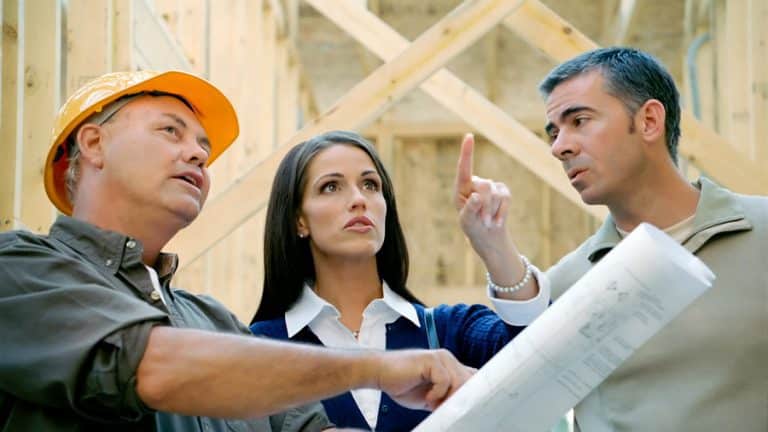
Now that I have your attention, I want to talk about a common mistake that a lot of straw bale homeowners make early on in the process. Often the most fatal mistake of any job is underestimating how much it will cost to build that beautiful home you worked so hard to design. Common examples of this are not including enough money for framing materials or electrical fixtures. Not so common is the mistake that comes before the numbers are even run: who will build the house.
(more…)

Check Your Finishes BEFORE You Install Them

corkfloorblemishsample.jpg

I had a very close call on a job I am working on this week. While I was in Maine on vacation, $10,000 worth of cork flooring was delivered to the job site and set for installation. My project manager noticed that there were blemishes on the cork and stopped the crew from installing it. He had the crew open a random number of boxes of the material and all of them had the same blemishes.

(more…)

Construction Job Site Scheduling

finish-on-towers0.jpg

With straw bale construction, a number of sub contractors will have to make extra trips to your job site as compared with a conventional home. An example of this is seen with roofing and plastering. On the house we are currently building, the design has a series of towers above the main roof line. In order to properly time the process, we had to work closely with the subs.
(more…)

A Loan Officer Offering Financing For Your Straw Bale Home

Many people ask me about financing a bale home. I work almost exclusively with a local banker here in Southern Oregon. He has integrated an excellent program and has linked it with other bank branches around the United States. He can therefore fund Straw Bale homes in just about every state in the Union!
(more…)

Moving Power and Phone

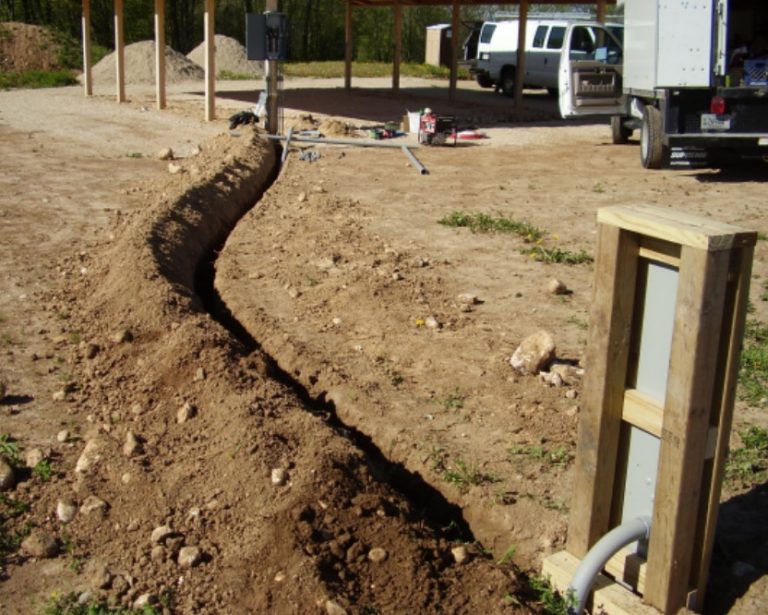
A house I am building is located on a rural lot that once held a mobile home. That mobile home had power and phone services to it; however, they were old and not suitable for the new, larger home. In addition, the underground pad mount vault for the power was located in the driveway of the new architectural design.
(more…)

Final Walk Through and Construction Punch List

fireplace.jpg

Towards the end of a home’s construction there comes a time to walk through the house with the owners and mark areas of concern that need to be addressed. In some cases, the items may be obvious like a window covered in plaster or major blemishes on the floor. In other cases, the signs may not be that obvious. A good way to make sure all of the items get fixed is to walk the house with a notepad and a roll of blue tape. The notepad is to write down all of the items and then have the owners sign the list. After you and the owners have signed it, make a copy and give one to the owners. That way, there can be no question as to what was agreed to for fixes.
(more…)