Cost to Build a Straw Bale Home: Why Costs Feel Confusing
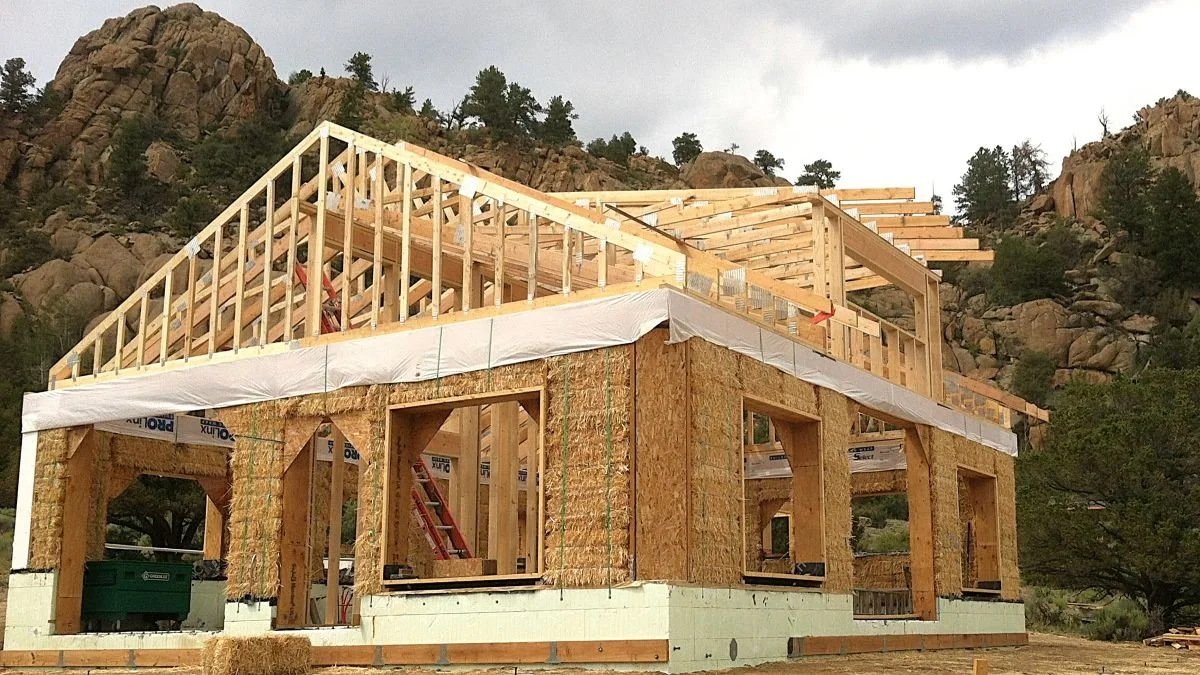
Honoring the Roots of Straw Bale Building
Straw bale construction grew out of experimentation and self-reliance. Many early homes were built by owner-builders working with modest budgets, volunteer labor, and a willingness to learn as they went. That history shaped the culture, and it continues to shape the stories we tell about cost.
Self-building is still alive. Owner-builders continue to take on their own projects. They reduce labor costs with sweat equity, make careful decisions about size and complexity, and accept a slower pace in exchange for control. That part of the story remains true.
What has changed is the environment around building.
Why Cost Expectations Feel Out of Sync
Over the past two decades, codes have tightened, energy standards have increased, and engineering expectations have become clearer. Insurance, inspections, and permitting now play a larger role in many regions. At the same time, material and labor costs have shifted in ways that affect every type of construction.
Much of the cost information people find today was formed in a different moment. The result is a gap between what people expect and what a modern project requires.
The Cost Memory Problem
If you search for straw bale building costs, you will still find numbers from earlier decades. Those numbers often reflect a specific set of conditions. Projects were sometimes built with minimal permitting, with volunteer labor, and with limited oversight. The numbers were not wrong in that context, but the context is often missing.
The internet does not age. Building conditions do.
Stories also tend to highlight the most successful outcomes. You see the finished home and the reported cost, but you do not always see the full picture behind it. Years of unpaid labor, discounted skilled work, infrastructure costs, and engineering requirements are often left out of the story. Without that context, it is easy to assume those results are typical.
How Modern Building Requirements Have Changed
Modern building operates under a different set of expectations. Energy codes require higher levels of performance, and structural requirements are more clearly defined. In many areas, wildfire, seismic, and wind exposure rules also influence how a home is designed and built. Permitting and inspection processes are more involved than they once were.
A home built under rural oversight in the late 1990s does not map cleanly onto a permitted build today.
Straw Bale Is One Part of the System
There is also a common misunderstanding about where costs come from. Straw bale is a wall system, and a house is far more than its walls. Most construction budgets are driven by elements that exist regardless of wall type, such as the foundation, roof structure, windows and doors, mechanical systems, and site work. Design, engineering, and permitting also play a significant role in the overall cost.
Straw bales can improve thermal performance and reduce long-term energy demand. At the same time, plaster work and detailing often increase labor time. The wall system shifts the balance in some areas, but it does not define the entire budget.
Where Owner Builders Still Have Leverage
Owner-builders still have meaningful leverage in this process. Taking on non-technical work can reduce labor costs. Simpler forms and smaller footprints can keep projects more manageable. A willingness to move at a slower pace can also reduce financial pressure.
At the same time, some parts of the project remain fixed. Every home still needs a foundation that performs, functional mechanical systems, and compliance with local code. Engineering may be required depending on the design and location. Sweat equity changes how labor is paid, but it does not remove the need for materials, infrastructure, or oversight.
Accountability Shapes the Outcome
Straw bale construction continues to reward people who take the process seriously. When you learn the basics of building science, follow proven details, and design with your site and local conditions in mind, the system performs well.
Challenges tend to show up when expectations are based on outdated examples or incomplete information. The goal is not to discourage building. The goal is to align expectations with the reality of building today so you can make informed decisions.
Building a straw bale home is still within reach. The difference is not whether it can be done, but how clearly the project is understood before it begins.
If you want to better understand how straw bale homes are designed, detailed, and built in today’s environment, the 16-Day Free Straw Bale e-Course is a good place to start. It walks through the core concepts step by step and helps you build a clearer picture of what your project will involve.