Tell Me More About What Is Taught
Your 7-day workshop questions, answeredUse this page to plan your week and set clear expectations. Find answers about what you will learn, the daily schedule, lodging and meals, what to bring, and how to prepare. If you do not see your question, email us at info@strawbale.com.
Still have questions?

Money WORTH SPENT. Even if you are just thinking of a straw bale house - take the workshop - it will give you clarity - if you want to do it (ha, you will), and will give you great tools to feel more confident in the build - whether you do it on your own or have it built - huge ROI
Basia. - Canada
⭐⭐⭐⭐⭐
Your Week Of Straw Bale Skills
Hands-on fundamentals and code-approved best practices so you can build with confidence.What You’ll Learn in 7 Days
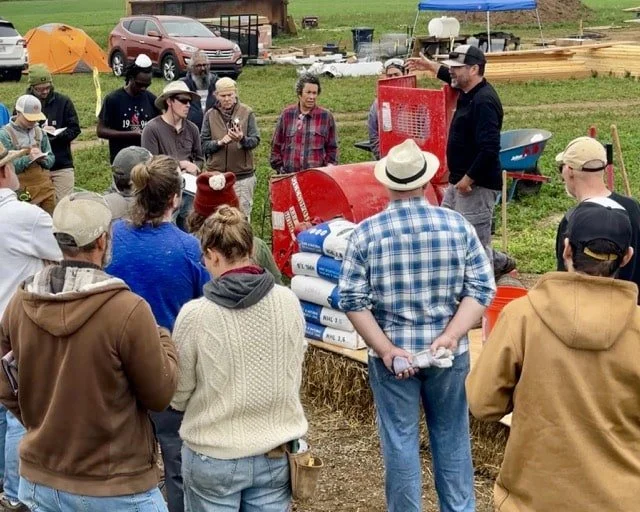
Our 7-day workshop is designed to teach the fundamentals of building straw bale walls. You will work on a real project, learn essential hands-on skills, and leave with a solid foundation of code-approved best practices. We focus on transferable techniques that apply across many straw bale styles, so you understand the overall process and how to build a beautiful, durable, and cost-effective structure with performance in mind.
Scope, Limits, and How We Support Your Next Steps
You will not learn every step required to build an entire home in one week, but you will leave knowing exactly where you may need more practice or research for your unique build. For example, if you plan to use an ICF foundation, we do not install foundations during the workshop. We will discuss the options, answer questions, and point you to clear next steps. Please note that teaching topics and skills vary slightly to match the design of each build. For unique details, such as wall type, see the workshop’s registration page or email us at info@strawbale.com.
Core Skills You Will Practice
The most valuable skills we teach at nearly every workshop, tailored to the host project.-
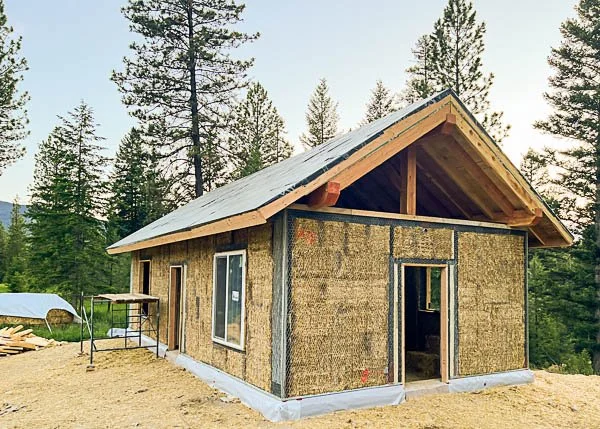
Create strong and durable walls by learning the techniques used by master balers.
-
Master the fastest knot tying system to save time and money on your project.
-
Create gorgeous curves and sexy transitions to create an inspiring home with the art of bale shaping.
-
Our framing system speeds your construction and lowers your budget.
-
Where and how to incorporate plumbing utilities into your straw bale build.
-
Learn how to simplify the incorporation of electrical wiring in your bale walls and work with your local area having jurisdiction.
-
Keep your house moisture & mold free with proper ventilation and window/door installations.
-
Include pockets of beauty in your home with the installation of straw bale niches or “nichos”.
-
Master effective strategies to install cabinets, partition walls, and other special installations.
-
Build a strong foundation for your home’s plaster and ensure years of protection for your investment.
-
Learn the art of plastering in order to create a beautiful and durable finish for your home.
-
Navigate the confusing world of paying for and insuring your straw bale home.
-
Why, where, and how to install toe-ups to keep your bale walls up to code and performing well.
-
Understand the key components behind using this framing detail in your bale wall designs.
-
Setbacks, bale stops, framing for curves, all the goodness!
-
A deep topic broken down into actionable, practical installation methods.
-
Ask us anything related to your personal project or general straw bale construction. ANYTHING!
The above list represents the basics of what is covered during the hands-on part of the workshop.
These topics are discussed in depth with “on-the-spot” lectures and question-and-answer sessions. Your questions on these or related topics are welcome and encouraged; they always bring value to the whole group. The discussions are rich information exchanges!
Other commonly raised topics and FAQs include:
Design Criteria
Engineering Options
Foundation Options
Running a Job Site Efficiently
Scheduling Sub-Contractors
Acting as the General Contractor
Complete Owner-Builder Techniques
Straw Bale Construction Details
Plastering Techniques and Materials
Green Building Materials
Other Aspects of Green Construction in Your Home


I really liked that we were encouraged to try different tasks and learn different facets of the strawbale building process. This allowed me to grasp the bigger picture of the entire build and have a better understanding of how each element of the building affects other elements and the rest of the building.
Ian M. - Helena, MT
⭐⭐⭐⭐⭐
What A Day At The Workshop Looks Like
Full, hands-on days on site, great meals, and relaxed community time in the evenings.
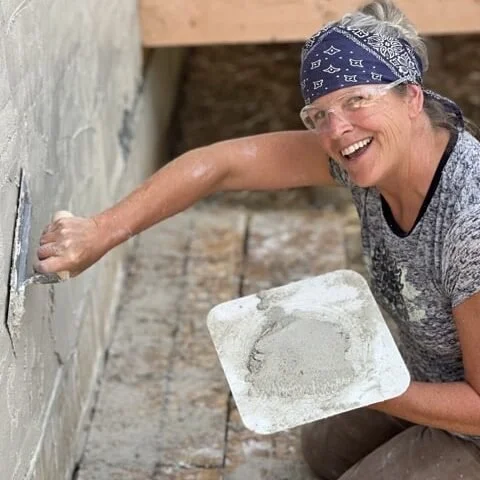
The days are full. We work hard on the job site in the morning, then break for a leisurely lunch. Afternoons continue the build. Evenings include dinner and downtime. We encourage people to bring instruments and their willingness to play together.
Although physical work is involved in building the structure, participants are encouraged to work at their own pace. You know your limits, and those limits are respected. Our goal is to complete as much of the building's construction as possible, from setting bales to plastering. In most cases, we will not get beyond the scratch (first) coat of plaster.
Three hearty meals a day are included in your tuition. The food is delicious and filling. Participants regularly thank the kitchen crew for a wonderful week.
Free on-site camping is available. Bathrooms and hot showers are provided. Please keep showers short to conserve water and to ensure everyone gets a turn. Some locations also offer simple accommodations such as cabins or tipis. These are first-come, first-served, and may have an additional cost depending on the site. Some workshops may also have space for RVs.
When An Old-Fashioned Barn-Raising Meets Summer Camp For Adults!