Hardwood Floors In A Straw Bale House
Hardwood floors bring warmth and character to a straw bale home. They are less common than concrete or earthen slabs because slabs offer thermal mass that pairs well with the high insulation of bale walls. Even so, wood floors remain a strong choice for many homes.
You will see hardwood or engineered wood floors in homes built on raised foundations, in homes where owners prefer the look and feel of wood, and in projects where budget or physical limitations steer people away from slab floors.
Wood floors work well in straw bale homes, but they introduce a detail you must plan for from the start.
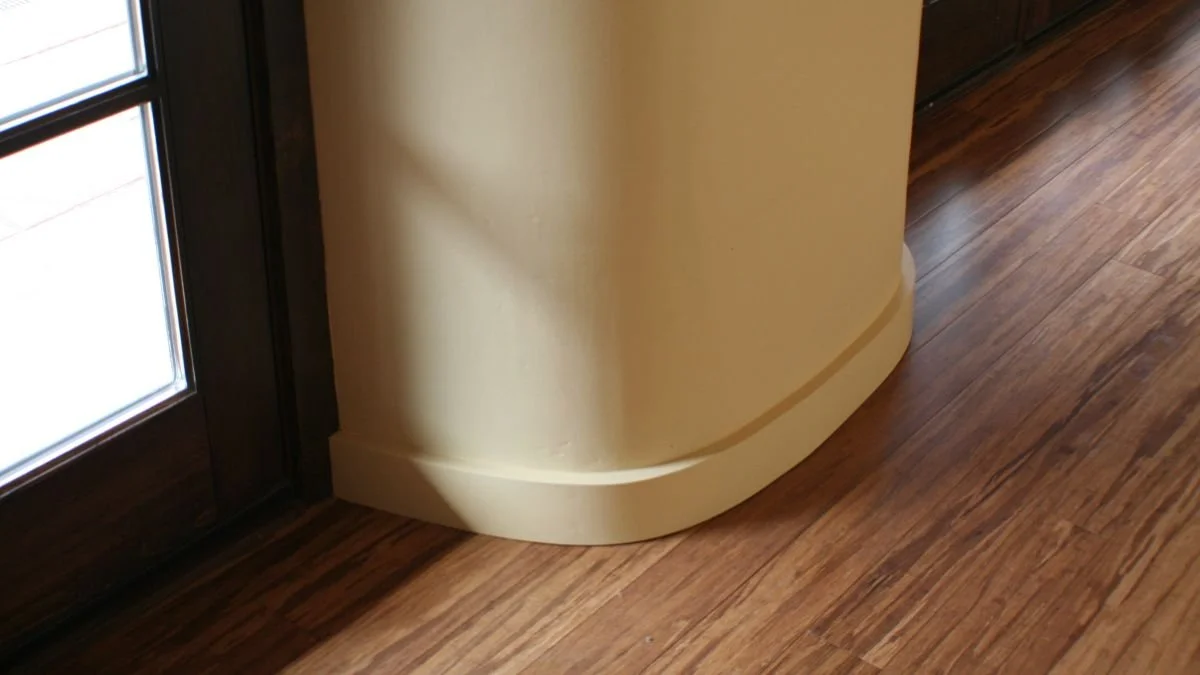
Floor Movement and Edge Gaps
Wood expands and contracts with seasonal changes. You need an expansion gap at every wall. If you skip this detail, the floor will buckle. Floating floors need even more freedom to move, so review the manufacturer’s instructions early in your project. Ideally, review them before you start baling.
A continuous gap around the room protects the floor. The next question is how to hide that gap without stopping the floor from moving.
Three Ways to Hide the Expansion Gap
Baseboard Trim
This is the familiar option. Baseboards hide the gap and look clean, but straw bale walls add two challenges.
• You need a nailer. In a standard wall, you fasten trim to exposed framing. In a bale wall, the framing sits behind your plaster. A simple fix is to add a skirt board to the face of the toe-ups before plaster. Plaster to the top edge of that board and use it as your nailer. Choose a board shorter than your trim. If you plan on a 3-inch baseboard, use a 2-inch nailer.
• Curved areas around doors complicate trim. Bale walls develop organic curves as mesh stretches over the straw. Straight wood does not match those curves. You can bend trim by steaming, kerf cutting the back, or choosing flexible products. Attachment takes some creativity. Cross-nailing into the plaster with adhesive sometimes works. In other cases, you need a curved nailer planned early in the build.
Tile Trim
Tile offers a rigid but forgiving option. Smaller pieces adapt to irregular surfaces and follow curves with less trouble. Install tile on either the scratch coat or the brown coat. Use the final coat of plaster to correct uneven spots. I prefer waiting until after the brown coat for a cleaner install. You do not need backing, and door curves are straightforward.
Plaster J Channel
J channel lifts the plaster off the floor, creating a clean shadow line. The flooring slides under the plaster edge, and the movement stays hidden. The result looks sharp and modern.
This approach requires careful layout. You need enough room to use the floor installation tools along the wall. You also face the same attachment questions at curves that you face with baseboards. With planning, it works well. Many people who like simple lines consider this their favorite finish.
Choosing the Right Approach
All three methods work in a straw bale home. Baseboard trim is familiar and flexible. Tile handles curves with little fuss. J channel delivers the cleanest look. Your choice depends on your wall shapes, your finish style, and the level of planning you want to invest before plaster.
Hardwood floors fit beautifully in straw bale homes when you handle the movement gap with care. A few thoughtful steps during construction set you up for a durable and elegant result.
Have you had success with another way? Please leave us a comment below so we all can learn!
Updated: December 12, 2025