Design Before Drawings in Straw Bale Homes
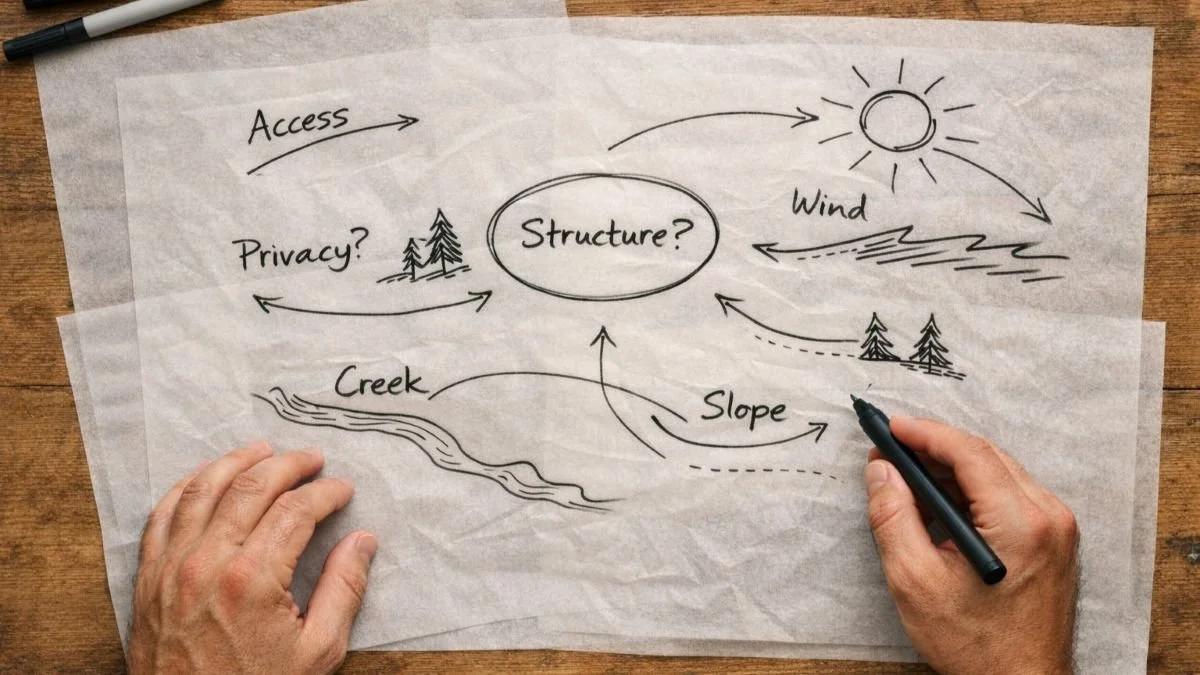
Many people approach design with one goal. Spend as little as possible and move on quickly. Design feels abstract. Construction feels real. This mindset creates problems later. I see this pattern over and over in straw bale projects.
Architectural design plays a practical role in keeping projects from getting sideways. Design reduces risk by answering questions early, before mistakes grow expensive.
Most Building Problems Start Before Construction
Few projects fail because of poor workmanship alone. Most problems trace back to early decisions or missing decisions.
Common examples include site placement, orientation, drainage, and access. Climate adds another layer. Snow load, wind exposure, sun angles, and moisture patterns shape building performance. Straw bale construction increases sensitivity to these choices. Wall thickness, plaster sequencing, roof overhangs, and window placement interact as a system.
A small example shows the difference. Changing a window size during design takes minutes. Changing a window size after framing triggers labor, material waste, and delays. The same logic applies across an entire project.
Design Works as Decision-making
Many people think design equals drawings. Floor plans and elevations matter, but they come later. Design answers questions in the right order.
Design helps you decide how a home sits on land. Design also forces an honest look at size and use. Design resolves how thick walls affect interior space, structure, and roof geometry. Design coordinates structure, insulation, windows, and finishes so parts support each other.
When decisions wait, options shrink. Costs rise. Stress builds.
Risk Grows Without Clarity
Skipping or rushing design shifts problem-solving into construction. This shift increases risk.
Permit reviewers request revisions when information feels incomplete. Builders price uncertainty into bids. Changes during construction slow progress and strain relationships. Most of the consulting work I do traces back to decisions made too late. Straw bale homes respond poorly to guesswork because wall systems and plaster layers demand coordination.
Time spent resolving questions early saves time later.
Reframing the Value of Design
Design does not exist to add cost. Design exists to control cost.
Research shows early design decisions influence most of a project’s final cost. Once construction begins, control drops fast. Money flows toward fixing problems rather than building progress.
Good design provides clarity. Clarity supports accurate pricing, smoother permitting, and steadier construction. For straw bale homes, clarity protects performance and durability.
If you feel tempted to minimize design, pause for a moment and ask a different question. Which decisions still feel unresolved? Design helps answer those questions while choices remain flexible and affordable.
If you are working through design decisions and want a second set of eyes, one on one consulting helps bring clarity before drawings or construction begin.
If you are early in the process, the 16-Day free eCourse walks through the key decisions straw bale builders face before construction starts.