Building Permits for Straw Bale Houses
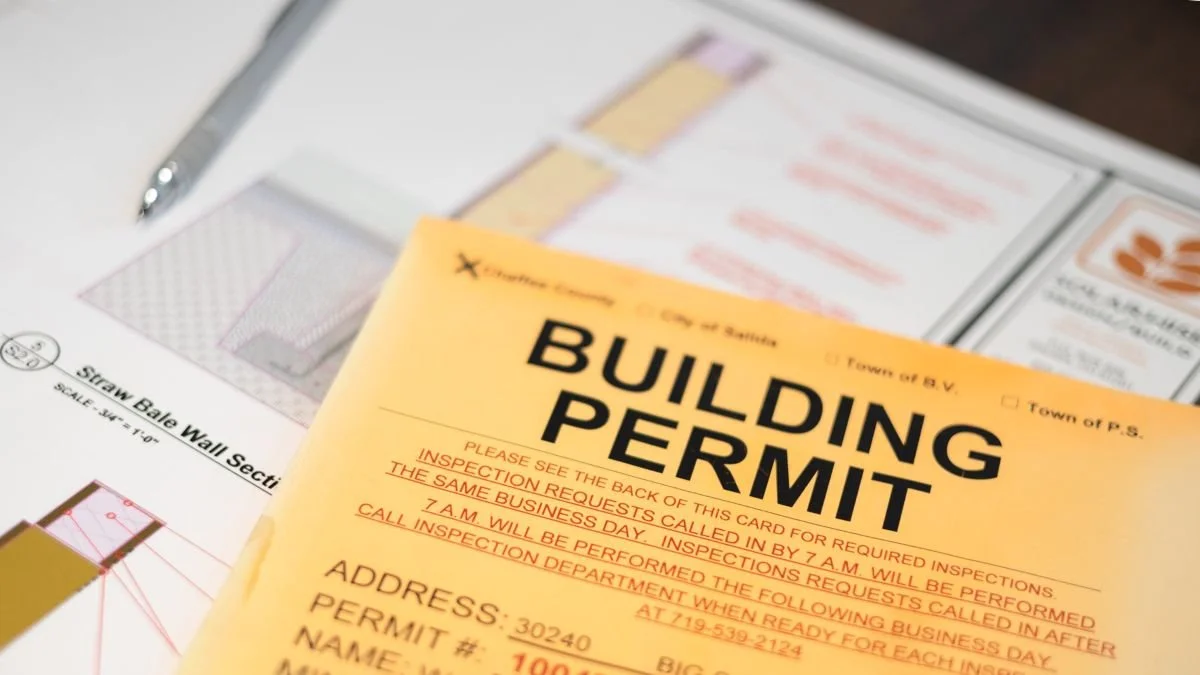
As many of you know from previous conversations or our posts on straw bale house construction, we are big fans of both building permits and building departments. We see them as potential allies in creating durable, safe structures.
That may sound weird since so many builders and architects have horror stories about working with building inspectors, but that has not been our experience in most cases. That doesn’t mean there haven’t been the occasional encounters with an inspector on a power trip, but they have been few and far between.
In the end, even those less-than-ideal encounters led to project approval, and the long-term impact of the experience was minimal within the scope of the entire construction process.
Evolving Codes & Familiarity
In prior decades, it has been relatively difficult, in some areas more than others, to obtain building permits for straw bale homes compared to those for conventional construction methods. The main reason for this was a lack of education within the building departments.
Many inspectors and plan checkers had simply never heard of straw bale construction, let alone inspected one. This is still true in some locations; however, the prominence of straw bale houses worldwide is beginning to have a real impact on the number of jurisdictions that are familiar with bale construction techniques.
Even more exciting is the inclusion of a straw bale construction section as an Appendix to the International Residential Code (IRC) (see Appendix BJ here). This approved provision enhances professionals' and owner-builders' ability to apply for and obtain building permits for straw bale construction projects.
Now, even if an inspector is not familiar with straw bale construction techniques, you can reference and/or guide them toward the code sections that provide specifics and allow for it. Problems solved.
Tips on Building Permits
As you move forward in your build process, keep the following points in mind when applying for straw bale building permits and approvals.
Submit a high-quality set of construction plans with the required detail to make approval easy for the building department, without over-detailing beyond their requirements or needs. Too much detail can get you stuck once the project gets started. For example, later in construction, you may discover a new local or green product you were unaware of and want to change your exterior window trim detail to use it. If, on the submitted plans, you simply identified “trim,” then you will most likely still have the freedom to make that change without resubmitting the plans for approval of the change order.
Be professional and timely in your presentation when you deliver the plans. Ensure you have adequate time to answer questions or for discussion if needed.
Consider having an engineer stamp your plans. This may increase costs, but it shows that structural loads have been properly addressed for your specific design and build site, and it helps shift the liability burden off the shoulders of the building department.
Know ahead of time what the building department’s concerns are about straw bale construction, or any aspect of the project, for that matter, so that you can address them directly in your presentation. Speaking to others who have used natural building techniques on prior builds in your area is a good way to research this (and a fun way to build your local community network!).
Know the code. Be firm in your knowledge of the code in case the inspector tries to mandate something the code does not require. A great resource for this is to learn from a copy of the Code that includes Commentary. This version goes beyond the ‘what’ and explains more of the ‘why’ and ‘how’ behind the best practices laid out in the Code requirements. Access a copy here courtesy of the California Straw Building Association (CASBA)
Be respectful of the officials you work with. No need to expect a fight. Rather, expect a professional relationship with a shared goal of building safe structures and prepare to make a stand if need be.
As years pass and an increasing number of people continue to seek sustainable, healthy home construction alternatives, more jurisdictions will become familiar with straw bale houses in the permitting process and best practice construction techniques. (See here for more on working with building departments.)
Now that straw bale techniques have passed the rigorous demands necessary to be included in the IRC, even if a local jurisdiction has not officially adopted Appendix BJ, you can still use it as a weighty reference to support your project goals!
Have questions??
Whether it's plan details, permitting processes, or where to get started on your vision, we're happy to help keep your vision moving forward with the right knowledge when you need it! Learn more HERE.
Updated: January 25, 2026