Rethinking Toe-Up Insulation in Straw Bale Homes
Why Toe-Ups Matter
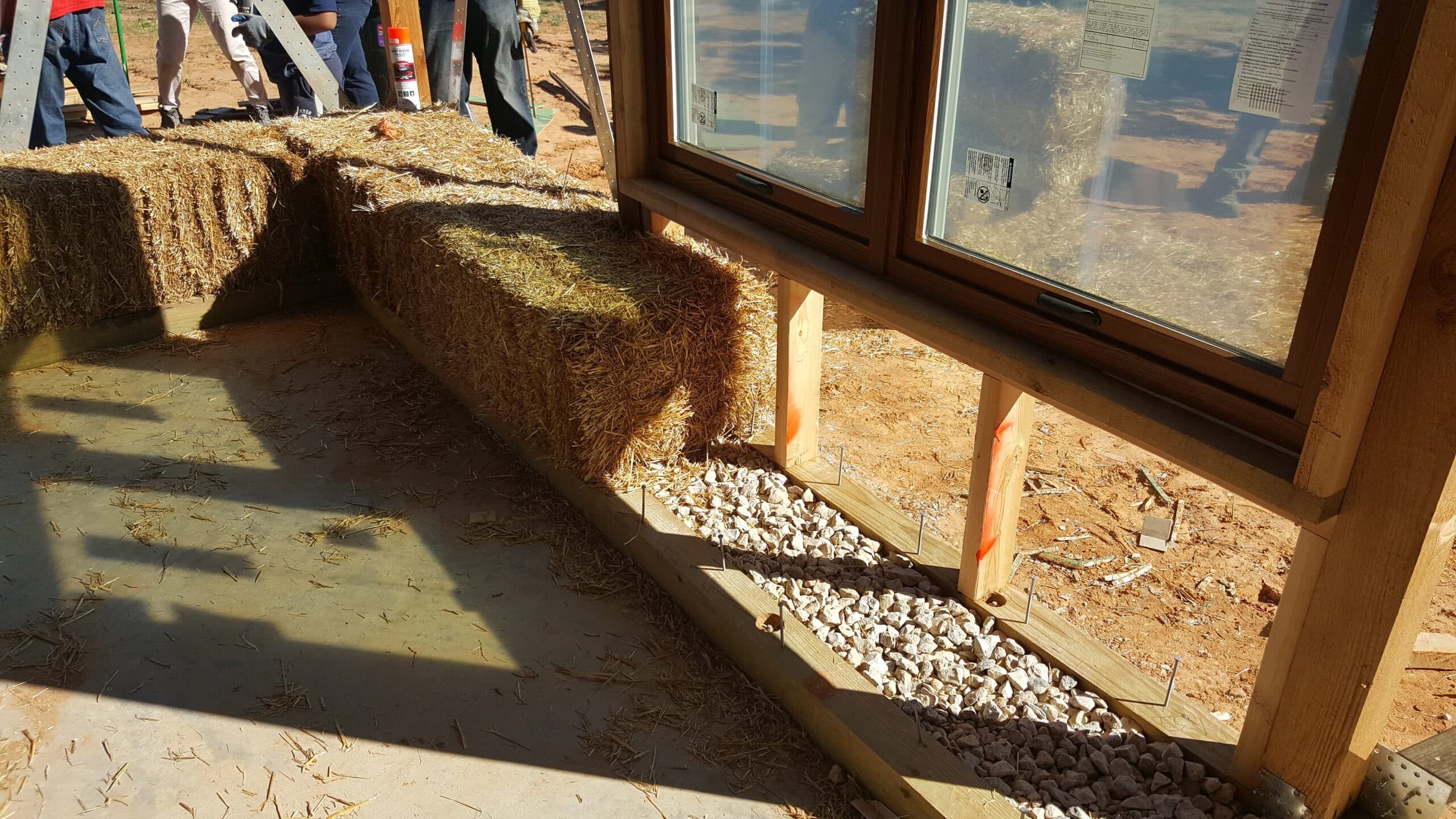
Toe-ups sit at the base of your walls, but they carry more responsibility than most people expect. They support the bales, set the first course of the wall, and connect the wall system to the foundation. What you place inside them shapes how the wall performs over time. This is not a minor detail. It sets the conditions for everything above it.
Gravel has long been the default infill, but it is not the only option. Pumice stone offers a similar function with improved insulating value. Where it is available, it can serve as a direct replacement for gravel and improve thermal performance at the base of the wall without changing the overall approach.
The History of Gravel in Toe-Ups
Gravel became the default infill for a reason. It is easy to source, simple to install, and durable. Early straw bale builders needed practical solutions that worked in a wide range of conditions, and gravel delivered. That history still holds value. It solved real problems and helped define a straightforward approach to building.
What Gravel Actually Does
Gravel does more than fill space. The air gaps between the stones provide some insulating value. That part often gets overlooked. At the same time, this insulation is limited and hard to quantify. The gaps between stones vary, which makes it difficult to assign a reliable R-value. From a performance and code standpoint, that uncertainty becomes a challenge.
In practice, gravel provides partial insulation rather than a complete solution.
Where Gravel Falls Short Today
The limitation shows up at the base of the wall. This is where heat loss tends to concentrate. A toe-up filled only with gravel often becomes a weak point in the building envelope.
Energy codes have tightened. Plan reviewers look for consistent and measurable thermal performance. When the insulation value of a material cannot be clearly defined, it raises questions. In many jurisdictions, gravel alone does not meet the expectation for continuous insulation.
This does not make gravel obsolete. It highlights that gravel alone no longer covers the full range of performance needs.
Rethinking Moisture at the Base of the Wall
A well-designed wall system should limit bulk water from ever reaching the toe-up. Roof overhangs, site drainage, plaster integrity, and foundation height all work together to keep the base of the wall dry.
The goal is not to move water through the toe-up. The goal is to avoid introducing it in the first place.
At the same time, assemblies need to stay forgiving. If incidental moisture gets in, it should not be trapped. The materials in the toe-up should allow for drying. This is where permeability and air movement within the assembly become important.
Updated Approaches That Work
A more current approach builds on what gravel does well and fills in the gaps. Many builders now use a combination of insulation and gravel within the toe-up.
In this assembly, the insulation is most often placed toward the exterior side of the wall. This supports thermal continuity where it matters most. A strip of gravel is then placed toward the interior. This gravel layer provides a small buffer zone, where incidental moisture can redistribute and dry without being locked against the insulation layer.
This approach shifts the role of gravel. It is no longer relied on as the primary solution. It becomes part of a broader strategy that balances insulation and drying potential.
Materials That Fit This Approach
Several insulation materials work well in this type of assembly. Stone wool boards are a common choice because they maintain performance even in the presence of moisture and allow vapor to move. Wood fiber insulation offers a plant-based option that supports vapor-open wall systems. Hempcrete can also be used, providing moderate insulation while remaining compatible with natural plasters.
Each of these materials provides a known, measurable R-value, supporting both performance and code compliance.
Code and Inspection Reality
If you plan to pull a permit, expect questions about insulation at the base of the wall. Plan reviewers look for clear, measurable thermal performance and assemblies that manage moisture without trapping it.
Gravel alone often falls short due to its variable insulation value. When you include a recognized insulation product in the toe-up, the conversation becomes more straightforward. This reduces back-and-forth during plan review and helps keep the project moving.
How to Make the Right Call
Each project comes with its own set of conditions. Climate, foundation height, and local code enforcement all play a role. In a mild climate with a raised foundation, gravel may still fit without much concern. In colder regions or areas with stricter review, adding insulation at the toe-up becomes harder to avoid.
Keep the details simple. Place materials where they perform best. Make sure each layer supports either structure, insulation, or drying potential.
Final Thoughts
Gravel helped define an early, effective approach to straw bale construction. That context still matters. At the same time, building standards have moved forward.
The air space within gravel does provide some insulation, but it is limited and difficult to quantify. When you pair gravel with a defined insulation layer and maintain the assembly's drying potential, you create a toe-up that performs more reliably.
This small shift leads to a wall system that performs better and moves through permitting with fewer issues.
If you are working through these details and want a second set of eyes, reach out for a consulting call. A small adjustment at the base of the wall can have a lasting impact on how the entire home performs.