What Makes Straw Bale Installation Easier or Harder?
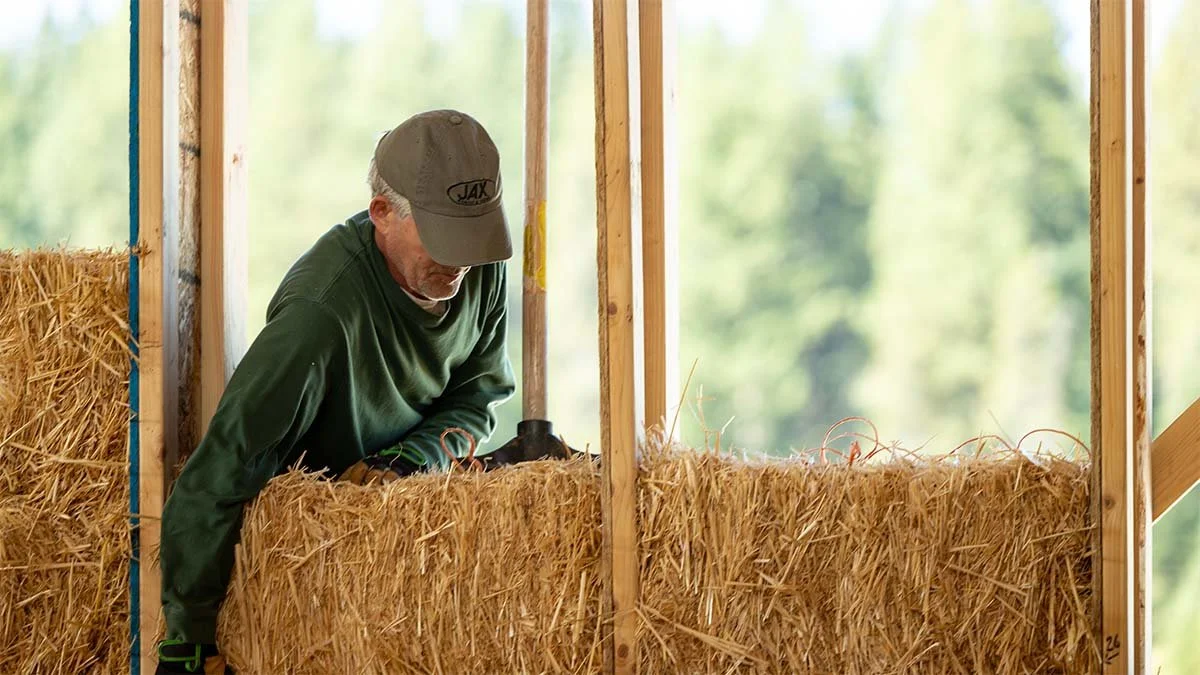
Most people picture straw bale installation as a simple process.
Set the bales in place. Stack them like blocks. Fill the walls. Move on to plaster.
In some ways, this is true. Bale installation is one of the most accessible parts of straw bale construction. It is physical, understandable work, and many people with limited construction experience are able to take part.
At the same time, simple does not always mean quick. Some straw bale walls go together with a steady rhythm. Others take more time, more fitting, and more patience. The difference often begins long before the bales arrive on site.
What Do We Mean by Wall System?
A wall system is the combination of parts and decision-making up the wall.
In straw bale construction, this includes the structural framing, the way bales fit into or around the framing, the toe-up detail, window and door openings, moisture management details, plaster preparation, and how all of those pieces connect.
This matters because bale installation is only one part of the wall system. By the time the bales arrive, many important decisions have already been made. The framing layout, opening sizes, toe-up width, bale dimensions, and construction sequence all influence how smoothly the work goes.
Most wall systems work. The better question is how much time, labor, and adjustment they require once bale installation begins.
Most Framing Systems Are Valid
There are many ways to build a straw bale wall.
Post-and-beam, modified post-and-beam, timber frame, stud framing, Larsen trusses, double-stud walls, structural bale walls, and hybrid systems all have a place when designed and built well.
The goal is not to say one system is right and another is wrong. Straw bale construction has always allowed for different approaches. Climate, engineering, local code requirements, builder experience, material availability, cost, and design goals all matter.
A wall system might be chosen because it simplifies engineering. It might fit the builder’s experience. It might support a certain look or align with the construction methods common in your area. Those are all valid reasons.
At the same time, each choice affects the work later. A wall system might be structurally sound, durable, and appropriate, yet still require more time during bale installation.
Working and Working Efficiently Are Different
There is a difference between a wall system that works and one optimized for efficient bale installation.
A system works when it supports the structure, protects the bales, supports plaster, manages moisture, and helps create a durable wall. A system installs efficiently when the bales have a clear place to go.
Those two things overlap, but they are not the same.
A wall with long, open bale runs usually moves quickly. The crew stacks, adjusts, and keeps moving. A wall with frequent posts, braces, openings, short sections, or tight corners tends to slow down. The crew stops more often to trim, notch, retie, stuff, or solve small conflicts.
None of those interruptions are wrong by themselves. They are part of building a house. The question is how many of them exist, how well they were planned, and how much labor the project has available.
Where Installation Time Gets Added
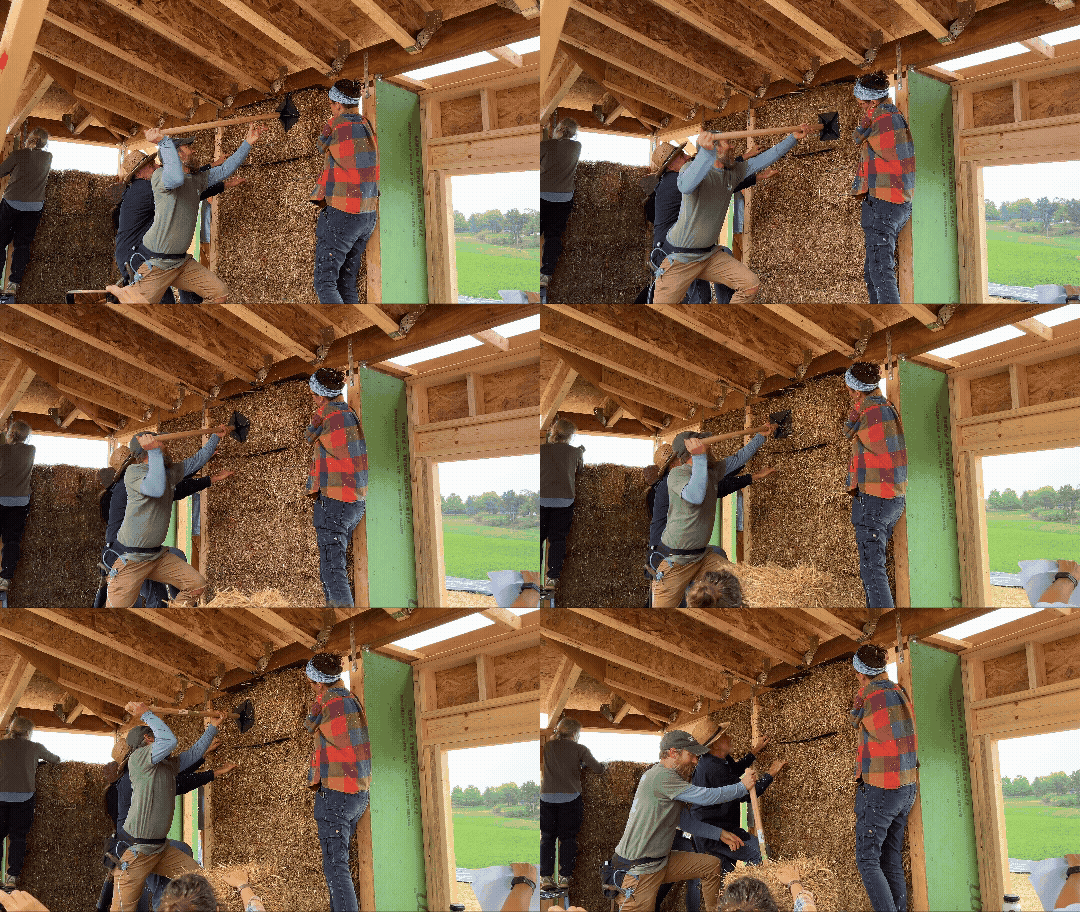
Bale installation slows down when the rhythm gets interrupted.
Window and door openings are common places where this happens. A window might look simple on the drawings, but it changes the bale work around it. Bales need to fit below the opening, along each side, and sometimes above it. If the opening does not align well with bale courses or bale lengths, more cutting and retying is required.
Short wall sections create similar challenges. A narrow section between a door and a corner rarely accepts a full bale. It often needs a custom fit. Corners, wall intersections, exposed posts, and diagonal bracing add their own layers of work.
A few extra minutes here and there may not seem like much. Across a whole house, those minutes become hours. On a larger or more complex project, they become days.
This is why bale installation should not be treated as a separate step. It is the outcome of design, framing, layout, and sequencing decisions made earlier.
Labor Costs Change the Conversation
Installation speed does not matter the same way on every project.
If you are an owner-builder, working with friends, hosting a workshop, or using lower-cost general labor, extra time might be acceptable. The slower process may be part of the learning, the community experience, or the sweat equity that helps make the project possible.
In those situations, a wall system requiring more fitting and adjustment is not necessarily a problem. It needs to be understood and planned for.
When paid labor is doing the work, the equation changes. Every hour has a cost. A wall system requiring extra cutting, notching, fitting, and troubleshooting will increase labor costs.
In this case, it often makes sense to reduce unnecessary complexity wherever possible. This does not mean the design needs to become plain. It means the wall system should be reviewed with labor in mind.
Longer bale runs, fewer interruptions, well-placed openings, a straight and level toe-up, and a clear staging plan all help the work move more smoothly. These choices do not eliminate the need for skill, but they reduce the time spent solving avoidable problems in the field.
Design With the Tradeoffs in Mind
The fastest wall system is not always the best wall system.
A more complex system might serve the structure, the climate, the design, or the builder’s comfort level. A system with more interruptions might still be the right choice for a specific home.
The important part is understanding the tradeoff.
If a project has many openings, exposed framing, short wall sections, or a framing layout that interrupts the bale runs, installation will likely take more time. If labor costs are high, those decisions deserve extra attention during the design phase.
If the project has more available hands and a flexible schedule, a slower installation process might be a reasonable tradeoff.
Good planning is not about making every project the same. It is about matching the wall system to the project’s priorities.
Final Thoughts
Good bale installation starts before the bales arrive.
A skilled crew will still need to make adjustments. Reties, trimming, notching, stuffing, and small corrections are normal parts of straw bale construction. Natural materials require judgment.
But the best time to reduce unnecessary labor is during design.
A clear wall system gives the bales a clear place to go. It helps the crew find a rhythm, reduces confusion, and makes the work more predictable.
Most framing systems work. Some simply ask more from the people installing the bales.
Understanding this early helps you make better design decisions, set a more realistic labor plan, and avoid surprises once construction begins.
Want to Learn More About Straw Bale House Building?
Join us for a hands-on learning experience to build your strawbale dream home with confidence.