Choosing the Right Sand for Lime Plaster
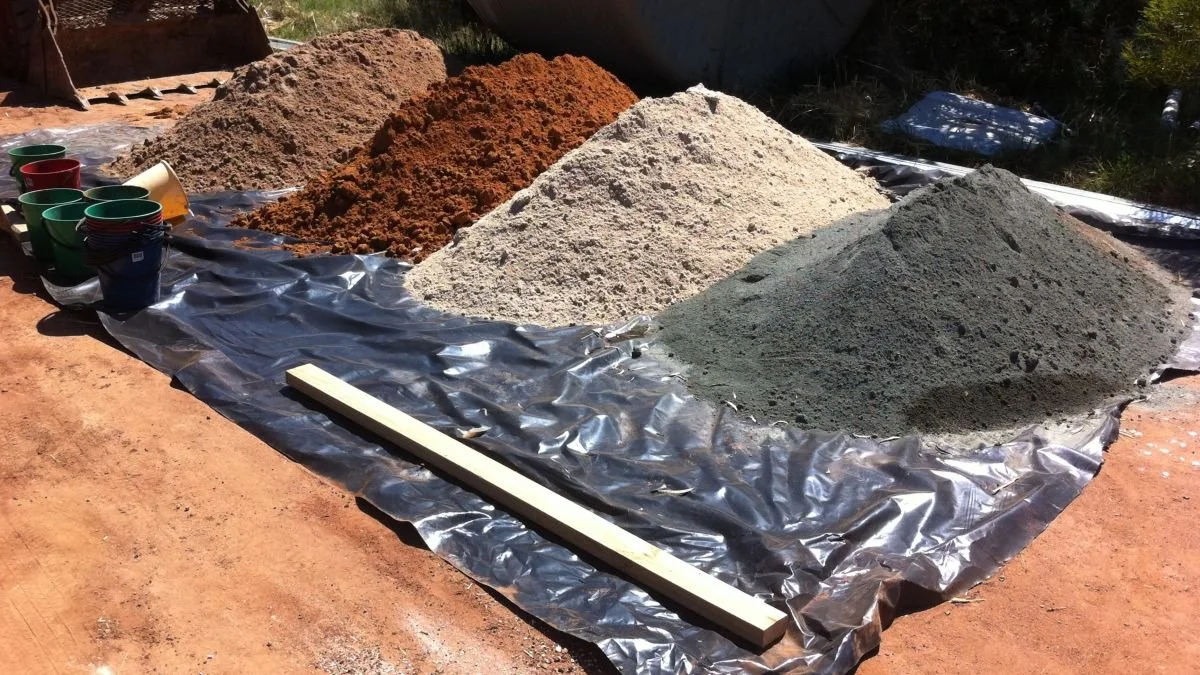
When we talk about lime plaster, much of the attention goes to the lime. NHL, hydrated lime, pozzolanic hydraulic lime, different manufacturers, different mixes. But sand makes up most of a site-mixed plaster, and your sand has a major effect on how the plaster mixes, applies, finishes, and performs.
The good news is you usually do not need a specialty sand. For scratch and brown coats, a suitable aggregate is often available from a local sand and gravel supplier. You need to know what you are looking for.
Start With Clean, Well-Graded Sand
For most scratch and brown coats, I start by looking for a washed concrete sand or similar sharp, graded aggregate.
In general, I want sand that is:
Clean, without excessive clay, silt, or organic material
Angular rather than uniformly smooth and rounded
Made up of a range of particle sizes
Coarse enough for the thickness of the plaster coat
The range of particle sizes matters. Smaller particles fill spaces between larger particles, producing a more tightly packed aggregate structure. This helps limit the amount of binder needed and reduces shrinkage.
Names vary from one supplier to another. Concrete sand, plaster sand, masonry sand, and washed sand do not mean exactly the same thing everywhere. Look at the material rather than relying solely on the name.
Earthaus PHL Binder and Local Sand
We have been using more Earthaus PHL Binder in our plaster work. Their approach is a good example of why selecting the sand remains an important part of mixing lime plaster.
Earthaus PHL Binder is made from hydrated lime and pumice pozzolan. The bag contains the binder, but you add locally sourced sand and water on site. Earthaus describes the aggregate as an important part of the plaster because the sand provides structure, adds volume, and helps control shrinkage.
This means the local sand becomes a major part of the finished plaster. When using a binder-only product such as Earthaus PHL, sourcing and testing your aggregate is part of preparing for the plaster work.
LimeWorks and Saint-Astier NHL
We also use Saint-Astier Natural Hydraulic Lime supplied in the United States by LimeWorks.us.
LimeWorks' specifications reinforce the same basic principles. For Saint-Astier NHL plaster, they call for natural or manufactured sharp sand with a good range of particle sizes and limited fine material.
They also give typical site-mixed plaster proportions for scratch, brown, and finish coats.
For scratch coats, I typically use a 1.5:1 sand-to-lime ratio. For brown coats, I usually move to 2:1. Those ratios fall within the range recommended by LimeWorks for Saint-Astier NHL plaster.
I still treat mix ratios as a starting point. Sand varies from one supplier and region to another, so the exact mix depends on the aggregate, substrate, coat thickness, and working conditions.
Concrete Sand Is Often a Good Place to Start
When I am sourcing sand for a workshop or project, one of my first questions to the supplier is whether they have washed concrete sand.
For the scratch and brown coats we typically use on straw bale walls, concrete sand often has the coarse, well-graded character I am looking for.
But do not assume all concrete sand is the same. Sand varies considerably by quarry and region.
Get a sample.
Look at the sand in your hand. You should see different grain sizes rather than a pile of nearly identical particles. Rub the sand between your fingers. You want a gritty aggregate without excessive fine material coating your hand.
Match the Sand to the Coat
The sand I want for a brown coat is not necessarily what I want for a finish coat.
Scratch and brown coats are applied relatively thick, so they benefit from a coarser aggregate. Finish coats are much thinner and generally use a finer aggregate.
This distinction becomes apparent while troweling. Large grains that work well in a thick brown coat become frustrating when you are trying to create a thin, smooth finish.
So when someone asks me, "What sand should I use for lime plaster?" one of my first questions is, "Which coat?"
You Might Not Need to Source Finish Sand
There is another option worth mentioning.
Many manufactured finish plasters already contain the appropriate aggregate. Instead of purchasing lime and sourcing sand separately, you buy a complete dry plaster mix and add water according to the manufacturer's instructions.
Earthaus offers pre-blended finish plasters where the aggregate has already been selected and incorporated into the mix. LimeWorks also supplies pre-blended plaster products for finish coat applications.
For finish work, these products remove much of the guesswork surrounding aggregate selection and give you greater consistency in texture and color.
Test Before You Buy
Sand is heavy, and a plaster project uses a lot of it. Before ordering several yards, get a bucket or two and make a test batch.
Mix some plaster. Put it on a wall or test panel. See how the mix feels on the hawk and trowel. See how easily you build thickness. Watch how the plaster behaves as it dries.
A small test batch tells you far more than the name printed on a supplier's price sheet.
If you are preparing to plaster a straw bale home, spend some time finding the right sand before plaster day. The lime gets much of the attention, but in a site-mixed plaster, most of what goes onto your wall is aggregate.
If you are getting ready to order lime plaster for your project, fill out the Plaster Discount Inquiry Form. I offer discounted pricing on select plaster products and will help connect you with the right supplier and product for your project.
Fill out the discount inquiry form to get started.